### Article: Brute Force Sudoku Solver: A Comprehensive Guide
#### Introduction
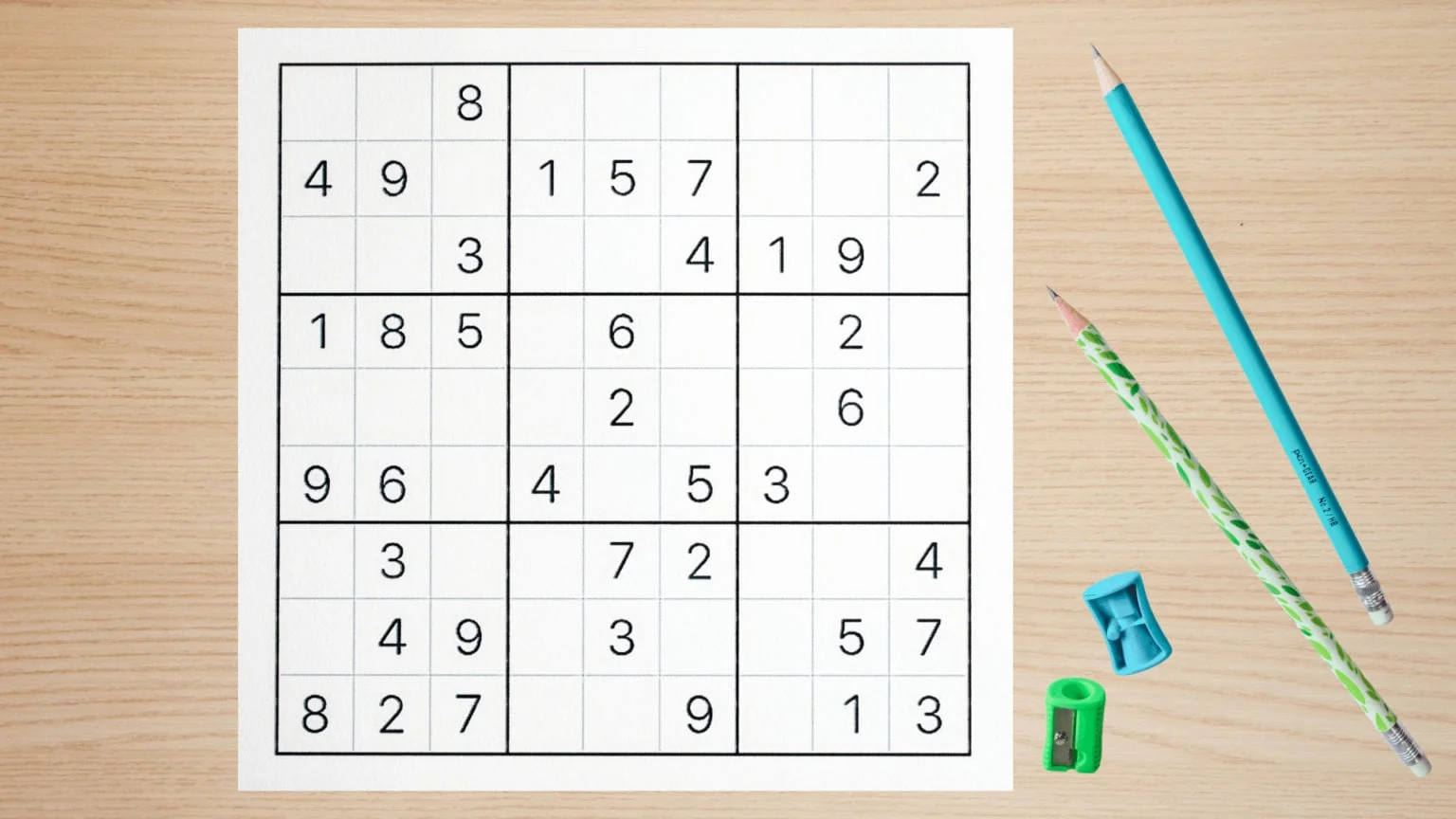
Sudoku, a popular puzzle game, challenges players to fill a 9×9 grid with numbers so that each row, column, and 3×3 subgrid contains all digits from 1 to 9. The brute force method, often used in programming, involves trying every possible combination until the correct solution is found. This article explores the concept of a brute force Sudoku solver, its mechanics, and its applications.
#### How Does a Brute Force Sudoku Solver Work?
A brute force Sudoku solver uses a recursive algorithm to systematically try all possible combinations of numbers until the correct solution is achieved. Here’s a step-by-step breakdown of the process:
1. **Initialization**: Start with an incomplete Sudoku puzzle.
2. **Recursive Search**: For each empty cell, try every possible number (1-9) that doesn’t violate Sudoku rules.
3. **Backtracking**: If a number doesn’t lead to a solution, backtrack to the previous step and try the next number.
4. **Solution Found**: When all cells are filled correctly, the solution is found.
#### Advantages and Disadvantages
**Advantages:**
– **Efficiency**: The solver can find solutions quickly for puzzles of varying difficulty levels.
– **Flexibility**: It can handle puzzles with different constraints, such as additional rules or clues.
**Disadvantages:**
– **Computational Cost**: Brute force solvers can be computationally expensive for larger puzzles or puzzles with fewer clues.
– **Limitations**: It may struggle with extremely difficult puzzles or those with a high degree of ambiguity.
#### Implementing a Brute Force Sudoku Solver
To implement a brute force Sudoku solver, you’ll need to follow these steps:
1. **Create a Sudoku Grid**: Define a data structure to represent the Sudoku grid, such as a 2D array.
2. **Input Puzzle**: Populate the grid with the given clues.
3. **Find Empty Cells**: Implement a function to locate empty cells in the grid.
4. **Try Numbers**: For each empty cell, try every possible number and check if it leads to a solution.
5. **Backtrack**: If a number doesn’t work, backtrack and try the next number.
6. **Output Solution**: Once a solution is found, display the completed grid.
#### Real-World Applications
Brute force Sudoku solvers have various real-world applications, including:
– **Educational Tools**: They can help students and puzzle enthusiasts understand the underlying principles of Sudoku.
– **AI Development**: They can be used as a benchmark for testing and improving algorithms in artificial intelligence.
– **Puzzle Creation**: They can generate new puzzles for players to solve.
#### Frequently Asked Questions (FAQ)
**Q: What is a brute force Sudoku solver?**
A: A brute force Sudoku solver is a recursive algorithm that tries every possible combination of numbers to find the correct solution for a Sudoku puzzle.
**Q: Is brute force the most efficient method for solving Sudoku?**
A: No, brute force can be computationally expensive, especially for larger puzzles or puzzles with fewer clues. More sophisticated algorithms, like constraint propagation and backtracking, can be more efficient.
**Q: Can a brute force solver handle puzzles with additional rules?**
A: Yes, it can be adapted to handle puzzles with additional rules by incorporating them into the algorithm.
**Q: Is a brute force solver useful for AI development?**
A: Yes, it can serve as a benchmark for testing and improving algorithms in artificial intelligence, particularly those related to search and optimization.
**Q: Can a brute force solver generate new Sudoku puzzles?**
A: Yes, it can be used to create puzzles by systematically filling in numbers and removing them according to Sudoku rules until a solvable puzzle is obtained.