### Sudoku Game and Artificial Intelligence: A Comprehensive Guide
#### Understanding Sudoku
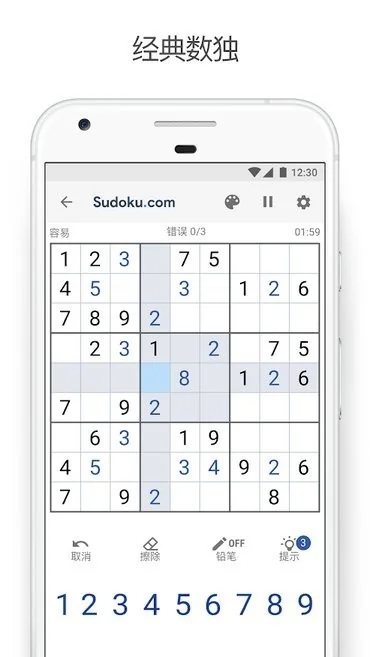
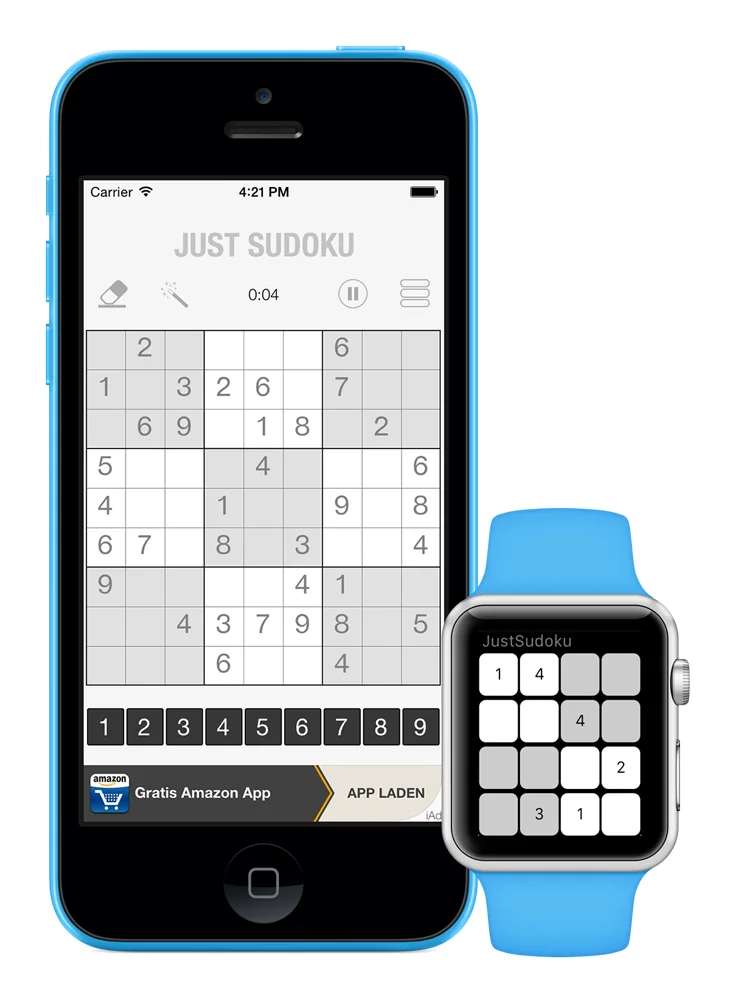
Sudoku is a popular logic-based puzzle that requires players to fill a 9×9 grid with digits so that each column, each row, and each of the nine 3×3 subgrids that compose the grid (also called “boxes”, “blocks”, or “regions”) contain all of the digits from 1 to 9. The objective is to complete the grid without guessing.
#### Introduction to Artificial Intelligence in Sudoku
Artificial intelligence (AI) has been increasingly applied to various domains, and Sudoku is no exception. AI can analyze the board and apply logical deduction to find solutions, which is often more efficient than manual solving.
#### Key AI Techniques Used in Sudoku Solving
##### Constraint Propagation
Constraint propagation is a fundamental technique in AI. It involves applying logical rules to restrict the possible values of variables (in this case, Sudoku cells). This helps narrow down the choices and simplify the puzzle.
##### Backtracking
Backtracking is a recursive method of solving puzzles by trying to build a solution incrementally, one piece at a time, and removing those solutions that fail to satisfy the constraints of the problem at any point of time (i.e., Sudoku rules).
##### Heuristics
Heuristics are techniques that make intelligent decisions at each step, aiming to reduce the number of possibilities that need to be checked. For example, the “most constrained variable” heuristic selects the cell with the fewest possible values.
##### Forward Checking
Forward checking is a method that involves updating the possible values of the remaining cells after a value has been assigned to one cell. It helps eliminate possibilities more quickly than constraint propagation alone.
#### Implementing AI in Sudoku Solving Software
Developers have created various AI-based Sudoku solving software. These programs use a combination of the above techniques to solve puzzles efficiently.
#### Challenges and Advancements
While AI has greatly improved Sudoku solving, challenges remain. Puzzles that are too complex can still take a long time to solve, and the AI might get stuck. Ongoing research is focused on improving the algorithms and making them more efficient.
#### FAQs
**Q1: What is the main purpose of using AI in Sudoku solving?**
AI is used to find solutions to Sudoku puzzles more quickly and efficiently than human players.
**Q2: Can AI solve all Sudoku puzzles?**
Yes, AI can solve any Sudoku puzzle that is well-defined and follows the rules of the game.
**Q3: Are there any differences in AI solving algorithms for easy, medium, and hard puzzles?**
Yes, the algorithms might vary slightly to optimize the solving process based on the puzzle’s difficulty.
**Q4: How do AI Sudoku solvers compare to human-solving techniques?**
AI solvers often apply logical rules and algorithms that can be faster and more systematic than human-solving techniques, which may involve guessing and intuition.
**Q5: What are some common AI techniques used in Sudoku solving?**
The most common techniques are constraint propagation, backtracking, heuristics, and forward checking.
**Q6: Can AI be used to generate Sudoku puzzles?**
Yes, AI can be used to generate Sudoku puzzles by following the rules and ensuring that the puzzles have unique solutions.
**Q7: Are there any ethical concerns with using AI for Sudoku solving?**
Most ethical concerns revolve around the potential misuse of AI for automation of tasks that require human thought and creativity. However, using AI for Sudoku solving is generally considered acceptable as it enhances leisure activities.