**Sudoku: The Math Behind the Puzzle**
**Introduction**
Sudoku, a popular puzzle game, has captured the interest of millions around the world. Its simplicity and complexity make it an engaging challenge for puzzle enthusiasts of all ages. But have you ever wondered what lies behind the numbers and how Sudoku’s mathematical principles contribute to its appeal? This article delves into the mathematics that underpin Sudoku and explores the logic behind its creation.
**The Rules of Sudoku**
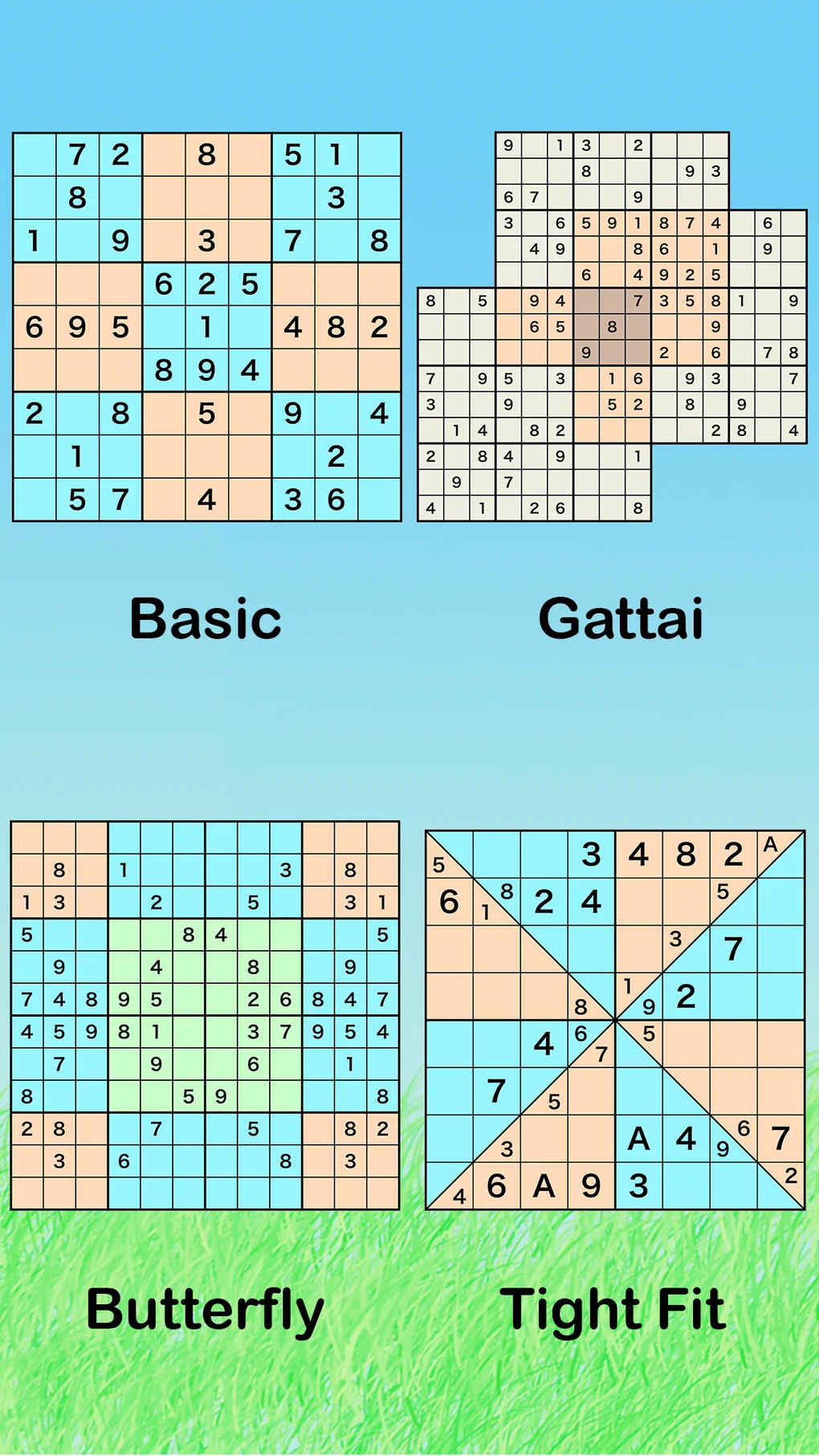
At its core, Sudoku is a grid-based puzzle where the objective is to fill a 9×9 grid with numbers so that each column, each row, and each of the nine 3×3 subgrids that compose the grid (also called “boxes”, “blocks”, or “regions”) contain all of the digits from 1 to 9. The key rules are:
1. Each row must contain the digits 1 to 9 without repetition.
2. Each column must contain the digits 1 to 9 without repetition.
3. Each 3×3 subgrid must contain the digits 1 to 9 without repetition.
**Mathematical Principles**
The mathematics behind Sudoku can be understood through several key concepts:
1. **Permutations**: Sudoku involves arranging numbers in a specific order. The number of possible permutations of the digits 1 to 9 in a 9×9 grid is 9 factorial (9!) or 362,880.
2. **Combinatorics**: The game requires the placement of numbers in a manner that adheres to the combinatorial constraints imposed by the rules.
3. **Constraint Satisfaction**: Sudoku is a constraint satisfaction problem, where the goal is to find a solution that satisfies all the given constraints without any contradictions.
4. **Graph Theory**: Sudoku can be represented as a graph problem, where each cell in the grid is a node, and each rule (row, column, box) is an edge connecting nodes.
**FAQ**
**Question 1: Can Sudoku be solved using pure logic without guessing?**
Answer: Yes, Sudoku can be solved using logical deduction without any guessing. Advanced solving techniques, such as X-Wing, Swordfish, and XY-Wing, can be used to solve complex Sudoku puzzles.
**Question 2: Is there a mathematical formula to generate Sudoku puzzles?**
Answer: Yes, there are mathematical algorithms that can generate Sudoku puzzles. One common method is to start with a partially completed grid and apply a series of logical operations to ensure the puzzle has a unique solution.
**Question 3: What is the highest difficulty level in Sudoku?**
Answer: The difficulty level of Sudoku puzzles can vary greatly. Some puzzles are designed to be extremely challenging and may require advanced solving techniques. The highest difficulty level is subjective and depends on the individual solver’s skill level.
**Question 4: Are there any variations of Sudoku?**
Answer: Yes, there are many variations of Sudoku, including Diagonal Sudoku, Jigsaw Sudoku, and Mini Sudoku. These variations introduce additional rules and constraints, making the puzzles more complex.
**Question 5: Can Sudoku be solved using a computer?**
Answer: Yes, computers can solve Sudoku puzzles using algorithms that mimic the logical deduction process. Some computers can solve even the most difficult Sudoku puzzles in a fraction of a second.
In conclusion, Sudoku’s mathematical foundation lies in permutations, combinatorics, constraint satisfaction, and graph theory. Understanding these principles not only enhances the enjoyment of solving Sudoku puzzles but also provides insight into the intricate logic that makes this game so captivating.