### Sudoku Game Code in Prolog
#### Introduction
Sudoku, a popular puzzle game, has been widely implemented in various programming languages. Prolog, a logic programming language, offers a unique approach to solving Sudoku puzzles. This article explores the implementation of a Sudoku game in Prolog, focusing on the logic and algorithms used.
#### Logic and Algorithms
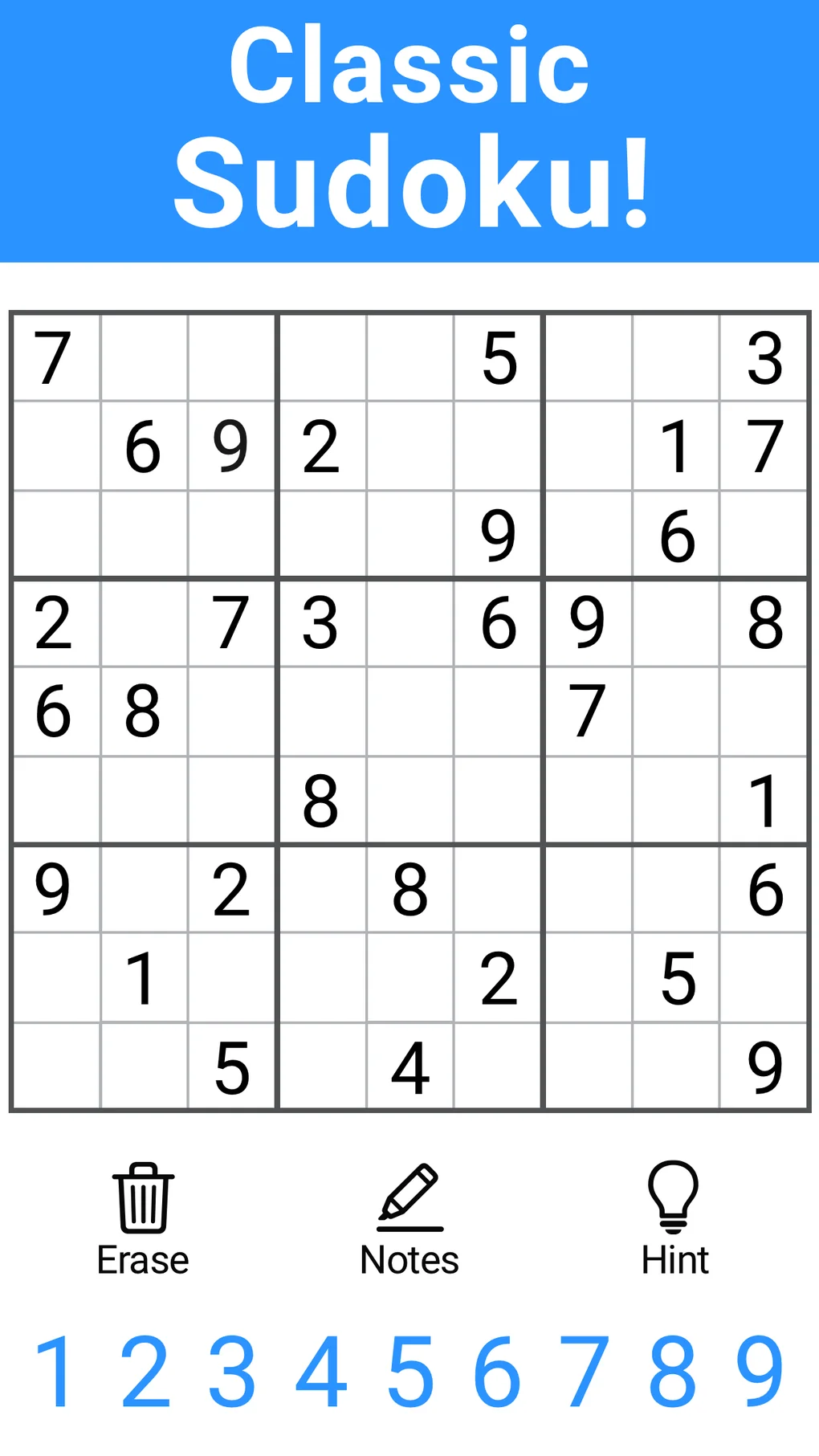
The Sudoku puzzle consists of a 9×9 grid divided into nine 3×3 subgrids. The objective is to fill the grid with digits so that each column, each row, and each of the nine 3×3 subgrids that compose the grid (also called “boxes”, “blocks”, or “regions”) contains all of the digits from 1 to 9. The following Prolog code snippet demonstrates a basic approach to solving Sudoku puzzles:
“`prolog
% Define the Sudoku grid as a list of lists
sudoku_grid([_, _, _, _, _, _, _, _, _,
_, _, _, _, _, _, _, _, _,
_, _, _, _, _, _, _, _, _,
_, _, _, _, _, _, _, _, _,
_, _, _, _, _, _, _, _, _,
_, _, _, _, _, _, _, _, _,
_, _, _, _, _, _, _, _, _,
_, _, _, _, _, _, _, _, _,
_, _, _, _, _, _, _, _, _]).
% Check if a number is valid in a specific position
valid_number_in_position(Position, Number) :-
nth1(Position, Grid, _),
nth0(Position, Grid, Number),
valid_row(Position, Number),
valid_column(Position, Number),
valid_box(Position, Number).
% Check if the number is valid in the row
valid_row(Position, Number) :-
nth0(Position, Grid, Number),
not(member(Number, RestOfRow)),
nth1(Position, Grid, RestOfRow).
% Check if the number is valid in the column
valid_column(Position, Number) :-
nth0(Position, Grid, Number),
not(member(Number, RestOfColumn)),
nth1(Position, Grid, RestOfColumn).
% Check if the number is valid in the box
valid_box(Position, Number) :-
nth0(Position, Grid, Number),
not(member(Number, RestOfBox)),
nth1(Position, Grid, RestOfBox).
% Recursive backtracking to solve the Sudoku
solve_sudoku(Grid) :-
not(end_of_grid(Grid)),
solve_sudoku_recursive(Grid).
solve_sudoku_recursive([Row|RestOfGrid]) :-
not(end_of_row(Row)),
member(Number, [1..9]),
valid_number_in_position(index_of_number(Row, Number), Number),
replace_number_in_row(Row, Number, NewRow),
solve_sudoku_recursive([NewRow|RestOfGrid]).
end_of_row([]).
end_of_row([_]).
end_of_grid([]).
end_of_grid([_]).
“`
#### Frequently Asked Questions (FAQ)
**Q: What is Prolog, and why is it suitable for solving Sudoku puzzles?**
A: Prolog is a logic programming language that uses a declarative programming style. It is well-suited for solving Sudoku puzzles because it allows you to define the rules of the game as logical constraints, making it easier to express the problem and find solutions.
**Q: How does the Prolog code work to solve Sudoku puzzles?**
A: The Prolog code uses a recursive backtracking algorithm. It tries to place a number in each empty position, checking if it is valid according to the Sudoku rules. If a number is not valid, it backtracks and tries a different number. This process continues until the entire grid is filled correctly.
**Q: Can this Prolog code be used to solve any Sudoku puzzle, or are there limitations?**
A: The Prolog code provided is a basic implementation and can solve many standard Sudoku puzzles. However, it may not handle certain edge cases or puzzles with complex constraints. For more complex puzzles, additional logic and optimization techniques may be required.
**Q: How can I modify the code to handle larger Sudoku grids?**
A: To handle larger Sudoku grids, you would need to adjust the grid size and the logic for checking rows, columns, and boxes. You would also need to modify the `solve_sudoku_recursive` function to handle the larger grid size appropriately.
**Q: Can Prolog be used for other types of puzzles or problems?**
A: Yes, Prolog is a versatile language that can be used for a wide range of problems, including puzzles, data analysis, and artificial intelligence applications. Its ability to express complex relationships and constraints makes it a powerful tool for solving various types of problems.